

God's Foreknowledge and Free Will
Early Christian writers usually held both truths together: God knows the future, and people still choose freely. Justin Martyr, Irenaeus, Tatian, and Origen all speak this way, and they connect it to real moral blame and judgment. Some passages stress God’s plan and foreknowledge more strongly, but they still leave room for human choice. The main early Christian answer is that foreknowledge does not cancel free will.
138 early-church witnesses · 243 source quotations · compared with Scripture
What did early Christians believe about the Foreknowledge of God and Free Will?
Early Christian writers taught both that God knows things ahead of time and that people still make real choices. Justin Martyr, Irenaeus, Tatian, Clement of Alexandria, Tertullian, Origen, Cyprian, and others all say humans are free, accountable, and judged for what they choose. Origen and Justin also say God’s foreknowledge does not force the act itself, so knowing an event in advance is not the same as causing it.
The picture is broad and early, but it is not perfectly uniform in wording, and some writers stress God’s plan more strongly than others. Overall, the main line is that foreknowledge and human freedom are both affirmed, not treated as opposites. Many more early Christian quotations, Bible passages, and source links are gathered below so you can study the evidence for yourself.
Key Takeaways
- Justin Martyr and Irenaeus taught that people can choose good or evil and are responsible for their choices.
- Origen said foreknowledge is not the same as causing an event.
- Many early writers tied free will to judgment, repentance, and obedience.
Questions Answered by the Sources
Did early Christians teach that God foreknows future events without causing sin?
Several early writers say God foreknows future events, but His foreknowledge does not make Him the cause of human wrongdoing. Origen and Justin both separate foreknowledge from compulsion, while the Bible cards link foreknowledge with divine purpose and future actions.
-
Justin Martyr, Dialogue with Trypho Direct teaching
But yet, since He knew that it would be good, He created both angels and men free to do that which is righteous, and He appointed periods of time during which He knew it would be good for them to have the exercise of free-will;
-
Origen, Against Celsus Direct teaching
...us, the following is our reply to such statements. Celsus imagines that an event, predicted through foreknowledge, comes to pass because it was predicted. But we do not grant this. We maintain that he who foretold it was not the cause of its happening because he foretold that it would happen. Rather, the future event itself, which would have taken place though it had not been predicted, afforded to him who was endowed with foreknowledge the occasion to foretell its occurrence. Now, certainly this result is present to the foreknowledge of him who predicts an event, when it is possible that it may or may not happen, namely, that one or the other of these things will take place. For we do not assert that he who foreknows an event, by secretly taking away the possibility of its happening or not happening, makes any such declaration as this: “This shall infallibly happen, and it is impossible that it can be otherwise.” And this remark applies to all the foreknowledge of events dependent upon ourselves, whether contained in the sacred Scriptures or in the histories of the Greeks. Now, what is called by logicians an idle argument, which is a sophism, will be no sophism as far as Celsus
-
Origen, Against Celsus Supporting witness
Now, certainly this result is present to the foreknowledge of him who predicts an event, when it is possible that it may or may not happen, viz., that one or other of these things will take place.
-
Justin Martyr, The First Apology Direct teaching
but God foreknowing all that shall be done by all men, and it being His decree that the future actions of men shall all be recompensed according to their several value, He foretells by the Spirit of prophecy that He will bestow meet rewards according to the merit of the actions done, always urging the human race to effort and recollection, showing that He cares and provides for men.
-
Tertullian, Against Marcion Supporting witness
After all, what title to prescience do we look for in the Author of the universe, since it was by this very attribute that He foreknew all things when He appointed them their places, and appointed them their places when He foreknew them?
More related quotations from this section 8 shown
-
Tertullian, Against Marcion Supporting witness
... must first defend those qualities of the Creator that are being questioned — namely, His goodness, foreknowledge, and power. But I will not stay long on this point, because Christ's own statement in John 10:25 immediately helps us. Proofs must be taken from works. The Creator's works immediately testify to His goodness, because they are good, as we have shown. They also testify to His power, because they are mighty and indeed came out of nothing. And even if they were made out of some earlier matter, as some claim, they are still in this way out of nothing, because they were not what they now are. In short, they are great because they are good. And God likewise is mighty, because all things are His own; from this it follows that He is almighty. But what should I say about His foreknowledge? It has as many witnesses as the prophets whom it inspired. After all, what stronger claim to foreknowledge do we look for in the Author of the universe, since by this very quality He knew all things beforehand when He assigned them their places, and assigned them their places when He knew them beforehand? There is sin itself. If He had not known about this beforehand, He would not have annou
-
Origen, Against Celsus Supporting witness
For God, comprehending all things by means of His foreknowledge, and foreseeing what consequences would result from both of these, wished to make these known to mankind by His prophets, that those who understand their words might be familiarized with the good, and be on their guard against its opposite.
-
Hippolytus, Refutation of All Heresies Supporting witness
For He is fully acquainted with whatever is about to take place, for foreknowledge also is present to Him.
-
Theophilus of Antioch, To Autolycus Supporting witness
After Adam was driven out of Paradise, while he was in that condition, he knew Eve his wife. God had formed her for him as a wife out of his rib. God did this, not because He was unable to make his wife separately, but because God knew beforehand that man would call on many gods. Since He knew this in advance, and knew that through the serpent error would bring in many gods that did not exist—for there is only one God, and even then error was trying to spread the idea of many gods, saying, "You shall be as gods"—therefore, so that it would not be thought that one God made the man and another made the woman, He made them both. And God made the woman together with the man, not only to show the mystery of God's sole rule, but also so that their love for each other might be greater. Therefore Adam said to Eve, "This is now bone of my bones, and flesh of my flesh." Besides this, he also prophesied when he said, "For this cause shall a man leave his father and his mother, and shall cleave to his wife; and they two shall be one flesh." This also is fulfilled in us. For who is there that marries lawfully and does not set aside mother and father, and his whole family connection, and all his
-
Acts 2:23 Background
this Jesus, delivered up according to the definite plan and foreknowledge of God, you crucified and killed by the hands of lawless men.
-
Isaiah 46:10 Background
Declaring the end from the beginning, and from ancient times the things that are not yet done, saying, My counsel shall stand, and I will do all my pleasure:
-
Job 9:6 Background
Yea, what things thou didst determine were ready at hand, and said, Lo, we are here: for all thy ways are prepared, and thy judgments are in thy foreknowledge.
-
Acts 15:18 Background
Known unto God are all his works from the beginning of the world.
Did the early Christians believe people really have free will?
Many early Christian writers explicitly say humans have free choice, can obey or disobey, and are accountable for what they do. They tie this to judgment language in Scripture and to the moral seriousness of repentance and obedience.
-
Justin Martyr, The First Apology Direct teaching
...ing of blame. Furthermore, if humanity did not have the power to avoid evil and choose good through free will, they would not be responsible for their actions. We demonstrate that both virtuous and flawed actions are made by free choice. We observe people switching between good and bad behaviors. If it were destined for someone to be either good or bad, they would not be capable of such changes. Moreover, not everyone would be good or bad, as this would make fate responsible for evil and contradict itself; or it would imply that neither virtue nor vice truly exists, and that things are considered good or evil merely by opinion, which the truth reveals as the greatest impiety and wickedness. However, we assert that it is inevitable fate that those who choose good receive worthy rewards, and those who choose the opposite receive due consequences. Unlike trees or animals that cannot act by choice, God created humans with the ability to choose. Thus, a person is deserving of reward or praise for freely choosing good, and is deserving of punishment for being evil by their own choice, rather than being inherently incapable of anything other than what they were made to be.
-
Irenaeus, Against Heresies: Book IV Direct teaching
But because man is possessed of free will from the beginning, and God is possessed of free will, in whose likeness man was created, advice is always given to him to keep fast the good, which thing is done by means of obedience to God.
-
Tatian, Address to the Greeks Direct teaching
...e the creation of men, was the Framer of angels. And each of these two orders of creatures was made free to act as it pleased. They did not have the nature of good, for that is with God alone. But in men it is brought to perfection through their freedom of choice. This is so that the bad man may be justly punished, since he became depraved through his own fault, while the just man may deservedly be praised for his virtuous deeds, since by the exercise of his free choice he refrained from transgressing the will of God. Such is the constitution of things in reference to angels and men. And the power of the Word, having in itself a faculty to foresee future events, foretold from time to time the issues of things to come. It did this not as if they were fated, but as things taking place by the choice of free agents. It also became a forbidder of wickedness by means of prohibitions, and the encomiast of those who remained good. And when men attached themselves to one who was more subtle than the rest, because he was the first-born, and declared him to be God, though he was resisting the law of God, then the power of the Word excluded the beginner of this folly and his adherents from
-
Lactantius, The Divine Institutes Direct teaching
...ommands for life ought to remove every kind of excuse, so that he may place on men the necessity of obedience, not by force, but by shame, and yet still leave them freedom. Then a reward may be appointed for those who obey, because it was in their power not to obey if they wished; and punishment for those who do not obey, because it was in their power to obey if they wished. How then can excuse be removed unless the teacher practices what he teaches, and, as it were, goes before and holds out his hand to the one who is about to follow? But how can anyone practice what he teaches unless he is like the one whom he teaches? For if he is subject to no passion, a man may answer his teacher like this: It is my wish not to sin, but I am overcome, for I am clothed with frail and weak flesh. It is this flesh that desires, that becomes angry, that fears pain and death. And so I am carried along against my will, and I sin not because I want to, but because I am forced. I myself know that I sin, but the necessity laid on me by my weakness, which I cannot resist, drives me on. What will that teacher of righteousness say in reply to these things? How will he refute and convict a man who claim
-
Cyprian, Treatises Direct teaching
nor does He impose the yoke of necessity, since the free choice of the will is left.
-
Justin Martyr, The First Apology Supporting witness
And again, unless the human race have the power of avoiding evil and choosing good by free choice, they are not accountable for their actions, of whatever kind they be.
-
Athenagoras, The Resurrection of the Dead Supporting witness
and further, from the judgment of their Maker upon them according to the time each has lived, and according to the rules by which each has regulated his behaviour — a judgment which no one can doubt will be just.
-
Irenaeus, Against Heresies: Book IV Supporting witness
And therefore the Lord says, “As to every idle word that men have spoken, they shall render an account for it in the day of judgment.” And, “he who has looked upon a woman to lust after her, hath committed adultery with her already in his heart;” and, “he that is angry with his brother without a cause, shall be in danger of the judgment.” [All this is declared,] that we may know that we shall give account to God not of deeds only, as slaves, but even of words and thoughts, as those who have truly received the power of liberty, in which [condition] a man is more severely tested, whether he will reverence, and fear, and love the Lord.
-
Athenagoras, The Resurrection of the Dead Supporting witness
...By both together I mean the human being made up of soul and body. And so such a human being becomes accountable for all his actions, and receives for them either reward or punishment. Now if righteous judgment gives to both together the proper return for the deeds done, then it is not right that the soul alone should receive the reward for deeds done in union with the body. For the soul by itself has no tendency toward the faults committed in connection with bodily pleasure, food, and bodily training. Nor is it right that the body alone should receive it, for the body by itself cannot discern law and justice. Rather, the human being composed of both is brought to trial for each deed done by him. And if reason does not see this happening either in this life or after death, then the result is very clear to everyone. It does not happen in this life, because reward according to merit has no place in the present life. Many atheists and people who practice every kind of injustice and wickedness live to the very end without suffering disaster. On the other hand, those who have clearly lived as examples of every virtue live with pain, insult, slander, outrage, and all kinds of suffering
-
Gregory Thaumaturgus, Metaphrase of Ecclesiastes Supporting witness
and that you believe that all shall be judged severally in the future, and that every man shall receive the just recompense for his deeds, whether they be good or whether they be evil.
More related quotations from this section 2 shown
-
1 Peter 1:2 Background
elect according to the foreknowledge of God the Father, in sanctification of the Spirit, for obedience and sprinkling of the blood of Jesus Christ: Grace to you and peace be multiplied.
-
Romans 14:12 Background
So then each of us shall give account of himself to God.
Common Questions
Did early Christians believe God already knows what people will do?
Yes. Justin Martyr, Origen, and other early writers say God knows future events before they happen.
Did early Christians think foreknowledge removes free will?
No. Justin Martyr, Irenaeus, Tatian, and Origen all connect foreknowledge with real human choice and responsibility.
Why did early Christians stress free choice?
They tied free choice to blame, praise, repentance, obedience, and final judgment.
Source Index for the Foreknowledge of God and Free Will
The guided sections above show the strongest quotations. This compact index highlights 160 ranked source links from 243 compiled sources for deeper study.
Source index 160 ranked links shown
Early Christian Writings 80 shown of 138
Primary-source quotations from early Christian writers and church documents.
-
Clement of Rome, Connection to Isaiah 1:16
-
Clement of Alexandria, Who Is the Rich Man That Shall Be Saved?
Bible Passages 80 shown of 105
Related Bible passages saved for comparison with the early Christian quotations.
Related Resources
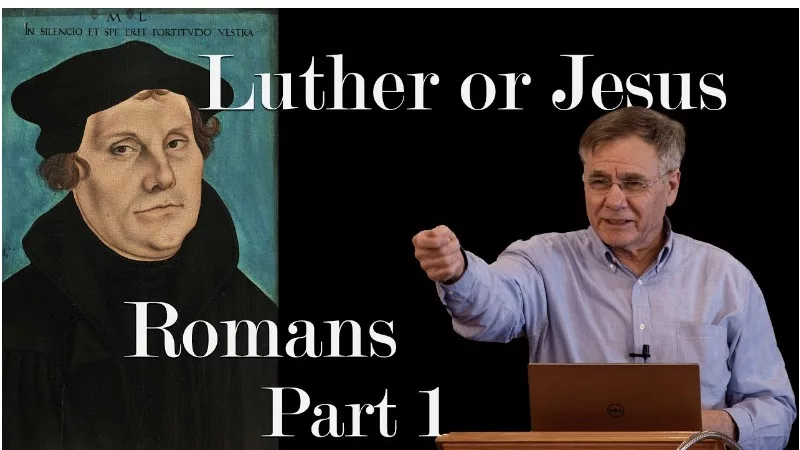 Course Lesson
Free Will and the Historical Background of Romans — Introduction (Part 2)
Open a related course lesson for more teaching connected with The Foreknowledge of God and Free Will.
Course Lesson
Free Will and the Historical Background of Romans — Introduction (Part 2)
Open a related course lesson for more teaching connected with The Foreknowledge of God and Free Will.
 Course Lesson
Predestination and Free Will
Open a related course lesson for more teaching connected with The Foreknowledge of God and Free Will.
Course Lesson
Predestination and Free Will
Open a related course lesson for more teaching connected with The Foreknowledge of God and Free Will.
 Site Page
Free will
Compare another early Christian topic page with related source quotations.
Site Page
Synergism and Free Will
Compare another early Christian topic page with related source quotations.
Site Page
Free will
Compare another early Christian topic page with related source quotations.
Site Page
Synergism and Free Will
Compare another early Christian topic page with related source quotations.