

Did Early Christians Use a Sinner's Prayer?
Early Christians do not appear to have used a fixed sinner's prayer as a standard way to come to faith. Justin Martyr, Clement of Rome, Tertullian, Origen, and Cyprian point instead to repentance, confession, prayer, fasting, and baptism. Some passages connect prayer with forgiveness, but they do not give one set conversion formula. The main early pattern is turning to God with repentance and a changed life.
122 early-church witnesses · 209 source quotations · compared with Scripture
Did early Christians use a sinner's prayer?
Early Christian writings do not give evidence of a fixed "sinner's prayer" as a set formula for salvation. Instead, they stress repentance, confession, prayer, fasting, baptism, and turning to God, with Justin Martyr, Clement of Rome, Tertullian, Origen, Cyprian, and the Apostolic Constitutions all pointing in that direction. The clearest early pattern is that sinners should repent and pray to God, often with tears and a changed life, rather than repeat one required prayer.
Some texts also link prayer with confession and forgiveness, but the evidence is mixed and indirect when judged against the modern idea of a sinner's prayer. The strongest early witnesses support repentance and baptismal conversion, not a standardized conversion formula. Many more early Christian quotations, Bible passages, and source links are gathered below so you can study the evidence for yourself.
Key Takeaways
- Early Christian writings stress repentance, confession, prayer, and baptism, not one fixed sinner's prayer.
- Justin Martyr and Cyprian describe people praying for forgiveness and being taught to change their lives.
- The evidence is indirect for a modern sinner's prayer and is strongest for repentance-centered conversion.
Questions Answered by the Sources
Did early Christians use a fixed sinner's prayer to become Christians?
No early Christian writer here gives a fixed sinner's prayer as the normal way to become a Christian. The pattern is repentance, confession, prayer, fasting, and baptism, especially in Justin Martyr, Clement of Rome, Tertullian, and Cyprian.
-
Justin Martyr, The First Apology Direct teaching
As many as are persuaded and believe that what we teach and say is true, and undertake to be able to live accordingly, are instructed to pray and to entreat God with fasting, for the remission of their sins that are past, we praying and fasting with them.
-
Clement of Rome, First Epistle to the Corinthians Direct teaching
Jonah proclaimed destruction to the Ninevites; but they, repenting of their sins, propitiated God by prayer, and obtained salvation, although they were aliens [to the covenant] of God.
-
Cyprian, Treatises Direct teaching
29. I entreat you, beloved brethren, that each one should confess his own sin, while he who has sinned is still in this world, while his confession may be received, while the satisfaction and remission made by the priests are pleasing to the Lord.
-
Cyprian, Treatises Supporting witness
36. If a man make prayer with his whole heart, if he groan with the true lamentations and tears of repentance, if be incline the Lord to pardon of his sin by righteous and continual works, he who expressed His mercy in these words may pity such men: When you turn and lament, then shall you be saved, and shall know where you have been.
-
Apostolic Constitutions, Apostolic Constitutions Supporting witness
... Ezekiel 33:11. Here the word gives hope to sinners, so that if they repent, they will have hope of salvation. Otherwise, out of despair, they might give themselves over to their transgressions. But having hope of salvation, they may be converted, and may pray to God with tears because of their sins, and may repent from their hearts, and so calm His displeasure toward them. Then they will receive pardon from Him, as from a merciful Father.
-
Apostolic Constitutions, Apostolic Constitutions Supporting witness
See, you who are our beloved sons, how merciful and yet righteous the Lord our God is; how gracious and kind He is to men; and yet He certainly will not clear the guilty, as Nahum 1:3 says. Even so, He welcomes the sinner who returns and restores him. So there is no reason for those who want to judge harshly, reject offenders completely, and refuse to give them exhortations that might lead them to repentance. Against such people, God says through Isaiah to the bishops, "Comfort, comfort my people, you priests; speak comfort to Jerusalem." Therefore, when you hear these words from Him, you ought to encourage those who have sinned, lead them to repentance, and give them hope. Do not wrongly suppose that, because of your love for them, you will share in their offenses. Receive those who repent eagerly, and rejoice over them. Judge sinners with mercy and compassion. For if a person were walking beside a river and about to stumble, and you pushed him and threw him into the river instead of offering your hand to help him, you would be guilty of your brother's murder. Instead, you ought to lend your helping hand when he is about to fall, so that he may not perish without remedy, and so th
What did early Christians tell sinners to do?
Early Christians told sinners to repent, confess sin, and pray to God for mercy and forgiveness. Clement of Rome, Aristides, Justin Martyr, Origen, and the Apostolic Constitutions all tie prayer to repentance and a changed life.
-
Clement of Rome, First Epistle to the Corinthians Direct teaching
Let us then also pray for those who have fallen into any sin, that meekness and humility may be given to them, so that they may submit, not unto us, but to the will of God.
-
Aristides, The Apology Supporting witness
And he purifies his heart, and his sins are forgiven him, because he committed them in ignorance in the former time, when he used to blaspheme and speak evil of the true knowledge of the Christians.
-
Justin Martyr, Hortatory Address to the Greeks Direct teaching
For it is the property of those who expect to obtain mercy by prayer and sacrifices, to cease from and repent of their sins.
-
Origen, Against Celsus Supporting witness
Now, what words of flattery and piteous wailing are contained in the Holy Scriptures when the sinner says in his prayers to God, I have acknowledged my sin, and mine iniquity have I not hid.
-
Apostolic Constitutions, Apostolic Constitutions Supporting witness
Repent therefore of this your wickedness, and pray to the Lord, if perhaps the thought of your heart may be forgiven you.
-
Anonymous, Treatise Against the Heretic Novatian Supporting witness
let us give our full confession, since the powers of heaven rejoice over our repentance, all the angels rejoice, and Christ also rejoices, who once again with full and merciful moderation exhorts us, laden with sins, overwhelmed with crimes, to cease from wickedness, saying, Turn, and return from your impieties, and your iniquities shall not be to you for a punishment.
-
Justin Martyr, The First Apology Supporting witness
His words being, “I came not to call the righteous, but sinners to repentance.” For the heavenly Father desires rather the repentance than the punishment of the sinner.
-
Clement of Alexandria, Who Is the Rich Man That Shall Be Saved? Supporting witness
And this is to repent, to condemn the past deeds, and beg oblivion of them from the Father, who only of all is able to undo what is done, by mercy proceeding from Him, and to blot out former sins by the dew of the Spirit.
-
Hermas, The Shepherd (Pastor) Supporting witness
... he said to me, "I told you that this tree was tenacious of life. You see," he continued, "how many repented and were saved." "I see, sir," I replied. "This is so that you may see," he added, "the great mercy of the Lord, that it is great and glorious, and that He has given His Spirit to those who are worthy of repentance." "Then why, sir," I said, "did not all these repent?" He answered, "To those whose heart He saw would become pure and obedient to Him, He gave power to repent with the whole heart. But to those whose deceit and wickedness He perceived, and saw that they intended to repent hypocritically, He did not grant repentance, lest they should again profane His name." I said to him, "Sir, show me now, concerning those who gave in the branches, what sort they are, and what their dwelling place is, so that those hearing it who believed, and received the seal, and broke it, and did not keep it whole, may, on coming to know their deeds, repent, and receive a seal from you, and may glorify the Lord because He had compassion on them and sent you to renew their spirits." "Listen," he said. "Those whose branches were found withered and moth-eaten are the apostates and traitors o
Did early Christians connect confession with prayer?
Yes. Some early writers connect confessing sins with prayer, and they warn against coming to prayer with an evil conscience. Barnabas, the Didache, Justin Martyr, and Cyprian all point in that direction.
-
Barnabas, The Epistle of Barnabas Direct teaching
Thou shalt confess thy sins. Thou shalt not go to prayer with an evil conscience. This is the way of light.
-
Didache, Connection to James 5:16 Direct teaching
In the church you shall acknowledge your transgressions, and you shall not come near for your prayer with an evil conscience.
-
Cyprian, Epistles Supporting witness
...did, if with tears, with groans, and with weeping they have shown the signs of a grieving and truly penitent spirit, when there seems, as far as man can tell, to be no hope of living, then careful and cautious help should finally be given to them. God Himself knows what He will do with such people, and in what way He will weigh them in the balance of His judgment. Meanwhile, we take anxious care that ungodly men should not praise our easy leniency, and that truly penitent men should not accuse our severity of being cruel. We bid you, most blessed and glorious father, heartfelt farewell always in the Lord; and keep us in your memory.
Did early Christians link repentance with baptism instead of a prayer formula?
The strongest early pattern links repentance, belief, and baptism more than a spoken conversion prayer. Justin Martyr, Tertullian, Cyprian, and the Apostolic Constitutions use baptism, confession, and repentance as the normal response.
-
Acts 2:38 Background
Then Peter said unto them, Repent, and be baptized every one of you in the name of Jesus Christ for the remission of sins, and ye shall receive the gift of the Holy Ghost.
-
Acts 19:4 Background
Then Paul said, “John indeed baptized with a baptism of repentance, saying to the people that they should believe on Him who would come after him, that is, on Christ Jesus.”
-
Acts 22:16 Background
And now why tarriest thou? arise, and be baptized, and wash away thy sins, calling on the name of the Lord.
-
Matthew 3:6 Background
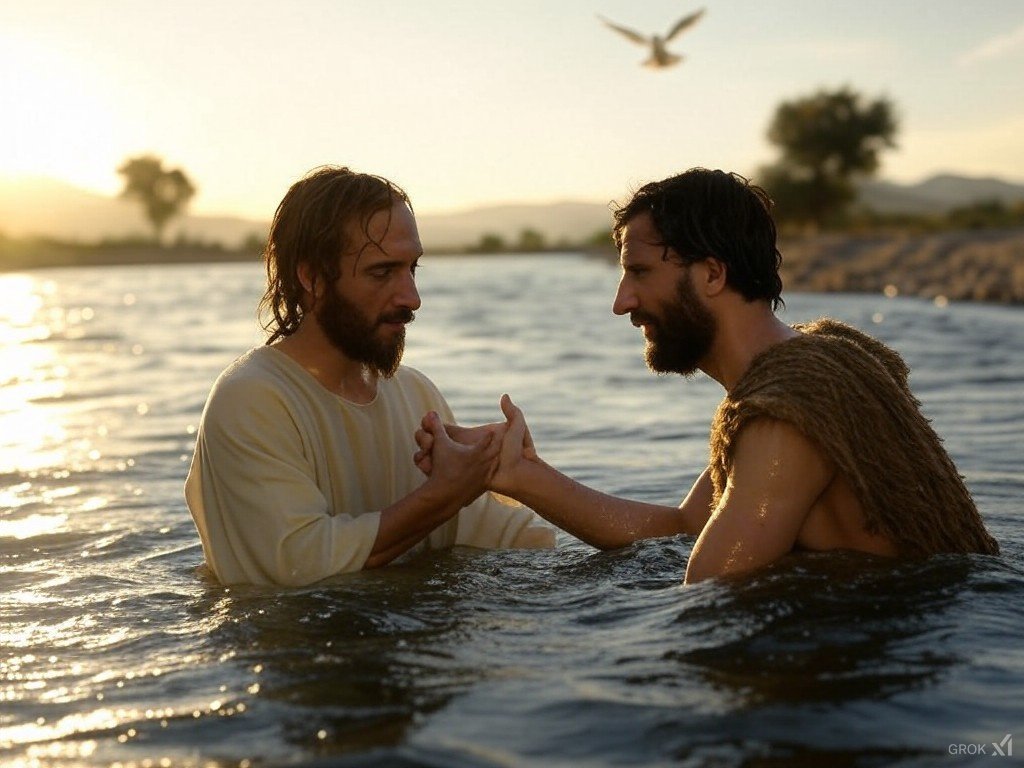
and they were baptized by him in the river Jordan, confessing their sins.
-
Tertullian, On Baptism Supporting witness
They who are about to enter baptism ought to pray with repeated prayers, fasts, and bendings of the knee, and vigils all the night through, and with the confession of all by- gone sins, that they may express the meaning even of the baptism of John: They were baptized, says (the Scripture), confessing their own sins.
-
Justin Martyr, The First Apology Supporting witness
But we, after we have thus washed him who has been convinced and has assented to our teaching, bring him to the place where those who are called brethren are assembled, in order that we may offer hearty prayers in common for ourselves and for the baptized [illuminated] person, and for all others in every place, that we may be counted worthy, now that we have learned the truth, by our works also to be found good citizens and keepers of the commandments, so that we may be saved with an everlasting salvation.
-
Cyprian, Epistles Supporting witness
...t, moreover, the very question asked in baptism is a witness to the truth. For when we say, “Do you believe in eternal life and the forgiveness of sins through the holy Church?” we mean that the forgiveness of sins is not given except in the Church, and that among heretics, where there is no Church, sins cannot be taken away. Therefore, those who claim that heretics can baptize must either change the question or hold to the truth, unless they also assign a church to those who, they argue, have baptism. It is also necessary that the person who is baptized should be anointed, so that, after receiving the chrism, that is, the anointing, he may be anointed by God and have in himself the grace of Christ. Further, it is from the Eucharist that the baptized are anointed with the oil sanctified on the altar. But one who has neither an altar nor a church cannot sanctify the created thing of oil. Therefore there also can be no spiritual anointing among heretics, since it is clear that among them the oil cannot be sanctified nor the Eucharist celebrated at all. But we ought to know and remember that it is written, “Let not the oil of a sinner anoint my head,” which the Holy Spirit warned a
-
Apostolic Constitutions, Apostolic Constitutions Supporting witness
...ho bore witness. No, the one who, out of contempt, refuses to be baptized will be condemned as an unbeliever and rebuked as ungrateful and foolish. For the Lord says, "Unless a man is baptized of water and of the Spirit, he shall by no means enter into the kingdom of heaven." John 3:5 And again, "He that believes and is baptized shall be saved; but he that believes not shall be damned." Mark 16:16 But the one who says, "When I am dying I will be baptized, lest I should sin and defile my baptism," is ignorant of God and forgetful of his own nature. For do not delay to turn to the Lord, for you do not know what the next day will bring. You should also baptize your infants, and bring them up in the nurture and admonition of God. For He says, "Let the little children come to me, and do not forbid them." Matthew 19:14
-
Apostolic Constitutions, Apostolic Constitutions Supporting witness
... is dead, or rather of the one dying together with Christ. But before baptism, let him who is to be baptized fast. For even the Lord, when He was first baptized by John and remained in the wilderness, afterward fasted forty days and forty nights. But He was baptized and then fasted, because He Himself had no need of cleansing, or of fasting, or of purification, since He was by nature pure and holy. Rather, He did it so that He might bear witness to the truth to John and give an example to us. Therefore our Lord was not baptized into His own passion, or death, or resurrection, for none of those things had yet happened, but for another purpose. Therefore, by His own authority He fasted after His baptism, as being the Lord of John. But he who is to be initiated into His death ought first to fast and then to be baptized. For it is not reasonable that he who has been buried with Christ and has risen again with Him should appear downcast at His very resurrection. For man is not lord of our Savior’s ordinance, since one is the Master and the other the servant.
Common Questions
Did the early church require a sinner's prayer?
No clear early text requires one set sinner's prayer. The early writings focus more on repentance, confession, prayer, and baptism.
Did early Christians pray for forgiveness?
Yes. Several early writers speak of sinners praying, confessing sins, and asking God for mercy and forgiveness.
What did early Christians tell sinners to do?
They told sinners to repent, confess sins, pray to God, and turn to a changed life.
Source Index for Did early Christians use a sinner's prayer
The guided sections above show the strongest quotations. This compact index highlights 160 ranked source links from 209 compiled sources for deeper study.
Source index 160 ranked links shown
Early Christian Writings 80 shown of 122
Primary-source quotations from early Christian writers and church documents.
Bible Passages 80 shown of 87
Related Bible passages saved for comparison with the early Christian quotations.
Related Resources
 Course Lesson
Are You Saying That a Person Who Prays a Sinner's Prayer is Not Truly Born Again?
Open a related course lesson for more teaching connected with Did early Christians use a sinner's prayer.
Course Lesson
Are You Saying That a Person Who Prays a Sinner's Prayer is Not Truly Born Again?
Open a related course lesson for more teaching connected with Did early Christians use a sinner's prayer.