

Early Christian Beliefs About Confession of Sins
Early Christian writings teach that sins should be confessed and turned from, especially in repentance, baptism, prayer, and church life. Hermas, Barnabas, Clement of Alexandria, Tertullian, Cyprian, Hippolytus, and the Apostolic Constitutions all connect confession with forgiveness or restoration. The strongest evidence points to open repentance and confession before God and often within the church. Some passages are about baptism or discipline, so the details of practice are mixed, but the basic call to confess sin is clear.
135 early-church witnesses · 225 source quotations · compared with Scripture
What did early Christians believe about confession of sins?
Early Christian writings teach that confession of sins belonged to repentance, baptism, prayer, and church discipline. Writers like Hermas, Barnabas, Clement of Alexandria, Tertullian, Cyprian, Hippolytus, and the Apostolic Constitutions connect confessing sin with forgiveness, penance, and a changed life. The evidence is broad across the second and third centuries, and it is stronger for public or church-connected confession than for a detailed private confession system.
Some passages are direct commands, while others use confession in baptismal or penitential settings, so the exact practice is sometimes mixed even though the call to confess sin is clear. Many more early Christian quotations, Bible passages, and source links are gathered below so you can study the evidence for yourself.
Key Takeaways
- Early Christians taught that confession of sins belonged with repentance, not with hiding sin.
- Many writers tied confession to forgiveness, baptism, or restoration to the church.
- The evidence is strongest for public or church-facing confession, with some variety in practice.
Questions Answered by the Sources
Did early Christians teach that sins should be confessed for repentance and forgiveness?
The strongest sources say believers should confess sins, turn from them, and seek forgiveness from God. Early Christian writers present confession as part of repentance rather than as a merely verbal formality.
-
Barnabas, The Epistle of Barnabas Direct teaching
Thou shalt confess thy sins. Thou shalt not go to prayer with an evil conscience. This is the way of light.
-
Lactantius, The Epitome of the Divine Institutes Direct teaching
...lf. So, when we happen to fail either in deed or in word, we may immediately come to a better mind, confess that we have offended, and beg pardon from God. According to His mercy, He will not deny it, except to those who persist in their error. Great is the help of repentance. Great is the comfort of repentance. It is the healing of wounds and offenses. It is hope. It is the harbor of safety. And he who takes this away cuts off from himself the way of salvation, because no one can be so just that repentance is never necessary for him. But we, even though there is no offense of ours, still ought to confess to God, and beg pardon for our faults, and give thanks even in evils. Let us always offer this obedience to our Lord. For humility is dear and lovely in the sight of God. Since He receives the sinner who confesses his fault rather than the just man who is haughty, how much more will He receive the just man who confesses, and exalt him in His heavenly kingdom in proportion to his humility! These are the things that the worshipper of God ought to offer. These are the victims. This is the sacrifice that is acceptable. This is true worship: when a man offers on the altar of God the
-
Apostolic Constitutions, Apostolic Constitutions Supporting witness
Proverbs 30:6 You shall confess your sins unto the Lord your God;
-
Leviticus 5:5 Background
And it shall be, when he shall be guilty in one of these things, that he shall confess that he hath sinned in that thing:
-
Proverbs 28:13 Background
Whoever conceals his transgressions will not prosper, but he who confesses and forsakes them will obtain mercy.
-
Psalms 32:5 Background
I acknowledged my sin unto thee, and mine iniquity have I not hid. I said, I will confess my transgressions unto the LORD; and thou forgavest the iniquity of my sin. Selah.
-
Matthew 3:6 Background
And were baptized of him in Jordan, confessing their sins.
Did early Christians confess sins in the church or before church leaders?
Several sources describe confession in a church setting, with bishops, clergy, penance, fasting, and restoration to communion. The evidence suggests confession could be public or ecclesial, especially for serious sin and restoration after falling away.
-
Hermas, The Shepherd (Pastor) Direct teaching
...ce except the one that happens when we go down into the water and receive forgiveness of our former sins." He said to me, "What you heard was sound teaching, for that is really so. For the person who has received forgiveness of sins ought not to sin anymore, but to live in purity. However, since you are asking carefully about everything, I will explain this to you also. I do not say it in order to give an excuse for error to those who are going to believe, or who have recently believed, in the Lord. For those who have now believed, and those who are going to believe, do not have repentance for sins, but they do have forgiveness of their previous sins. But for those who were called before these days, the Lord has appointed repentance. For the Lord, knowing the heart and knowing beforehand all things, knew the weakness of human beings and the many tricks of the devil, that he would bring some evil on the servants of God and would act wickedly toward them. Therefore the Lord, being merciful, had mercy on the work of His hand and appointed repentance for them. And He has given me authority over this repentance. Therefore I say to you that if anyone is tempted by the devil and sins a
-
Hippolytus, Exegetical Fragments Direct teaching
... three in the first multiple. And the fiftieth psalm is a prayer for the forgiveness of sins, and a confession. For just as, according to the Gospel, the fiftieth received remission, thus confirming that understanding of the jubilee, so the one who offers such prayers in full confession hopes to receive remission in no number other than the fiftieth. And again, there are also certain others that are called Songs of Degrees, fifteen in number, just as the steps of the temple were also fifteen in number. By this they show, perhaps, that the steps, or degrees, are included within the number seven and the number eight. And these Songs of Degrees begin after the one hundred and twentieth psalm, which is called simply a psalm, as the more accurate copies give it. And this is the number of the perfection of human life. And the one hundredth psalm, which begins, "I will sing of mercy and judgment, O Lord," includes the life of the saint in fellowship with God. And the one hundred and fiftieth ends with these words, "Let every thing that has breath praise the Lord."
-
Hippolytus, Exegetical Fragments Supporting witness
And the fiftieth psalm is a prayer for the remission of sins, and a confession.
-
Clement of Alexandria, The Instructor (Paedagogus) Direct teaching
... by human faith and divine grace, our transgressions being taken away by one Paeonian medicine, the baptism of the Word. We are washed from all our sins and are no longer entangled in evil. This is the one grace of illumination, that our characters are not the same as before our washing. And since knowledge rises up with illumination, shedding its beams around the mind, the moment we hear, we who were untaught become disciples. Does this, I ask, happen at the coming of this instruction? You cannot tell the time. For instruction leads to faith, and faith with baptism is trained by the Holy Spirit. That this faith is the one universal salvation of humanity, and that there is the same equality before the righteous and loving God, and the same fellowship between Him and all, the apostle showed most clearly when he spoke in this way: "Before faith came, we were kept under the law, shut up to the faith which should afterwards be revealed, so that the law became our schoolmaster to bring us to Christ, that we might be justified by faith; but after that faith has come, we are no longer under a schoolmaster." Do you not hear that we are no longer under that law which came with fear, but
-
Lactantius, The Divine Institutes Direct teaching
...pentance? Therefore, He who is both Lord and a most gentle Father promises that He will forgive the sins of those who repent, and that He will blot out all the iniquities of the man who begins again to practice righteousness. For just as the uprightness of his past life is of no help to the man who lives badly, because his later wickedness has destroyed his works of righteousness, so also former sins do not stand in the way of the man who has corrected his life, because his later righteousness has wiped away the stain of his former life. For the man who repents of what he has done understands his former error. And for this reason the Greeks speak better and more meaningfully of metanoia, which we may express in Latin as a return to a right understanding. For he returns to a right understanding, and recovers his mind, as it were, from madness, when he is grieved over his error. He rebukes himself for his madness and strengthens his mind for a better way of life. Then he is especially on guard against this very thing, so that he may not be led again into the same snares. In short, even dumb animals, when they have been trapped by deceit, if they somehow get free and escape, become
-
Irenaeus, Against Heresies: Book V Supporting witness
Therefore, by forgiving sins, He indeed healed humanity, while also revealing who He was. For if no one can forgive sins except God alone, and the Lord forgave them and healed people, it is clear that He Himself was the Word of God made the Son of man, receiving from the Father the power to forgive sins; because He was human, and because He was God, so that as a man He suffered for us, and as God He might have compassion on us and forgive our debts, which made us debtors to God our Creator. And so David said beforehand, "Blessed are those whose iniquities are forgiven, and whose sins are covered. Blessed is the man to whom the Lord has not counted sin;" indicating the forgiveness of sins that comes with His coming, by which "He has destroyed the record" of our debt and "nailed it to the cross;" so that just as through a tree we became debtors to God, through a tree we may also obtain the forgiveness of our debt.
-
Irenaeus, Against Heresies: Book V Supporting witness
...d. For Adam, it is said, “heard the voice of the God.” Rightly then does His Word say to man, “Your sins are forgiven you;” He, the same one against whom we had sinned in the beginning, grants forgiveness of sins in the end. But if indeed we had disobeyed the command of another, and it was a different being who said, “Your sins are forgiven you,” such a one is neither good, nor true, nor just. For how can he be good, who does not give from what belongs to himself? Or how can he be just, who takes away the goods of another? And in what way can sins truly be forgiven, unless He against whom we have sinned has Himself granted forgiveness “through the bowels of mercy of our God,” in which “He has visited us” through His Son?
-
Cyprian, Treatises Supporting witness
29. I entreat you, beloved brethren, that each one should confess his own sin, while he who has sinned is still in this world, while his confession may be received, while the satisfaction and remission made by the priests are pleasing to the Lord.
-
Lactantius, The Divine Institutes Supporting witness
For being desirous of promoting our life and salvation in accordance with His own goodness, in that circumcision He has set before us repentance, that if we lay open our hearts — that is if we confess our sins and make satisfaction to God — we shall obtain pardon, which is denied to those who are obstinate and conceal their faults, by Him who regards not the outward appearance, as man does, but the innermost secrets of the heart.
-
1 John 1:9 Background
If we confess our sins, he is faithful and just to forgive us our sins, and to cleanse us from all unrighteousness.
-
Acts 3:19 Background
Repent therefore, and turn again, that your sins may be blotted out,
-
Acts 8:22 Background
Repent, therefore, of this wickedness of yours, and pray to the Lord that, if possible, the intent of your heart may be forgiven you.
More related quotations from this section 2 shown
-
Wisdom of Sirach 21:1 Background
My son, hast thou sinned? do so no more, But ask pardon for thy former sins.
-
Wisdom of Sirach 17:25 Background
Return unto the Lord, and forsake thy sins, Make thy prayer before his face, and offend less.
Did early Christians connect confession of sins with baptism and remission of sins?
The supplied sources repeatedly connect repentance, confession, and baptism with remission of sins. Some writers say baptism follows repentance and confession, while Scripture Bible passages show baptism and forgiveness being linked together.
-
Irenaeus, Against Heresies: Book III Direct teaching
Coming frequently into the Church, and making public confession, he thus remained, one time teaching in secret, and then again making public confession;
-
Irenaeus, Against Heresies: Book I Supporting witness
Some of them, indeed, make a public confession of their sins;
-
Cyprian, Epistles Direct teaching
For, as in smaller sins which are not committed against God, penitence may be fulfilled in a set time, and confession may be made with investigation of the life of him who fulfils the penitence, and no one can come to communion unless the hands of the bishop and clergy be first imposed upon him;
-
Apostolic Constitutions, Apostolic Constitutions Supporting witness
and if upon examination you find that he is penitent, and fit to be received at all into the Church when you have afflicted him his days of fasting, according to the degree of his offense — as two, three, five, or seven weeks — so set him at liberty, and speak such things to him as are fit to be said in way of reproof, instruction, and exhortation to a sinner for his reformation, that so he may continue privately in his humility, and pray to God to be merciful to him, saying: If You, O Lord, should mark iniquities, O Lord, who should stand?
-
Apostolic Constitutions, Apostolic Constitutions Background
...ll acquainted with the Scriptures. You are the voice of God and witnesses of His will. You bear the sins of all and intercede for all. As you have heard, the word severely threatens those who hide the key of knowledge from men, who are liable to destruction if you do not declare His will to the people under you. You shall receive a sure reward from God, and unspeakable honor and glory, if you rightly minister in the holy tabernacle. For just as the burden is yours, so also you receive as your fruit the supply of food and other necessities. For you imitate Christ the Lord. And as He bore the sins of us all on the tree at His crucifixion, the innocent One for those who deserved punishment, so you also ought to make the sins of the people your own. For it is said about our Savior in Isaiah, "He bears our sins, and is afflicted for us." Isaiah 53:4 And again, "He bore the sins of many, and was delivered for our offenses." Isaiah 53:12 Therefore, as you are examples for others, so you have Christ as your example. Therefore, as He is concerned for all, so you should be concerned for the laity under you. For do not think that the office of a bishop is an easy or light burden. Therefore
Did early Christians believe confession still mattered after baptism or after serious sin?
Multiple sources say repentance remains necessary after sin and that those who have fallen can still be restored if they repent. Some texts also stress that repentance should not be delayed and that pardon is denied to the obstinate.
-
Hippolytus, Discourse on the Holy Theophany Direct teaching
...aptize me, the Baptist, that Your pre-eminence may be known. I, O Lord, baptize with the baptism of repentance, and I cannot baptize those who come to me unless they first confess fully their sins. Be it so then that I baptize You. What have You to confess? You are the Remover of sins, and will You be baptized with the baptism of repentance? Though I should venture to baptize You, the Jordan dares not come near You. I have need to be baptized by You, and You come to me?"
-
Hippolytus, Discourse on the Holy Theophany Supporting witness
I, O Lord, baptize with the baptism of repentance, and I cannot baptize those who come to me unless they first confess fully their sins.
-
Origen, Commentary on John Supporting witness
...rias, in the wilderness. And he came into all the region around the Jordan preaching the baptism of repentance for the remission of sins; as it is written in the book of the words of Isaiah the prophet, The voice of one crying in the wilderness, Prepare the way of the Lord, make His paths straight.” Luke, however, adds the continuation of the prophecy: “Every valley shall be filled, and every mountain and hill shall be brought low, and the crooked shall become straight, and the rough ways smooth, and all flesh shall see the salvation of God.” He writes, like Mark, “Make His ways straight,” shortening, as we saw before, the text, “Make straight the ways of our God.” In the phrase, “And all the crooked shall become straight,” he leaves out the word “all,” and changes the word “straight” from plural to singular. Also, instead of the phrase, “The rough land into a plain,” he gives, “The rough ways into smooth ways.” And he leaves out, “And the glory of the Lord shall be revealed,” and gives what follows, “And all flesh shall see the salvation of God.” These observations are useful because they show how the evangelists are accustomed to shorten the sayings of the prophets. It must al
-
Tertullian, On Baptism Direct teaching
...her hand, the very thing in John which was celestial, the Spirit of prophecy, so completely failed, after the transfer of the whole Spirit to the Lord, that he soon sent to ask whether He whom he himself had preached, whom he had pointed out when coming to him, were HE. And so the baptism of repentance, Acts 19:4, was treated as if it were a candidate for the remission and sanctification soon about to follow in Christ. For when John used to preach baptism for the remission of sins, Mark 1:4, the declaration was made with reference to future remission. For it is true, as it is, that repentance is first, remission follows after; and this is preparing the way, Luke 1:76. But he who prepares does not himself perfect. He procures for another to perfect. John himself declares that the celestial things are not his, but Christ's, by saying, "He who is from the earth speaks concerning the earth; He who comes from the realms above is above all;" and again by saying that he baptized in repentance only, but that One would soon come who would baptize in the Spirit and fire. Of course this is because true and stable faith is baptized with water, to salvation; pretended and weak faith is bapti
-
Tertullian, On Baptism Supporting witness
... not the fact that He Himself did not baptize trouble anyone. For into whom should He baptize? Into repentance? Then what use do you make of His forerunner? Into remission of sins, which He used to give by a word? Into Himself, whom by humility He was concealing? Into the Holy Spirit, who had not yet descended from the Father? Into the Church, which His apostles had not yet founded? And so, with that same baptism of John, His disciples used to baptize as ministers, with which John had baptized before as forerunner. Let no one think it was with some other baptism, because no other exists, except that of Christ afterward. Which, at that time, of course, could not be given by His disciples, since the glory of the Lord had not yet been fully attained, nor the efficacy of the font established through the passion and the resurrection. Because neither can our death see dissolution except by the Lord's passion, nor can our life be restored without His resurrection.
-
Tertullian, On Baptism Supporting witness
But if repentance is a thing human, its baptism must necessarily be of the same nature: else, if it had been celestial, it would have given both the Holy Spirit and remission of sins.
-
Apostolic Constitutions, Apostolic Constitutions Supporting witness
...e, and of the Comforter who testified. But first you shall anoint the person with the holy oil, and afterward baptize him with water, and at the end you shall seal him with the ointment. In this way, the anointing with oil may be the participation of the Holy Spirit, the water the symbol of the death of Christ, and the ointment the seal of the covenants. But if there is neither oil nor ointment, water is enough for the anointing, for the seal, and for the confession of Him who is dead, or rather of the one dying together with Christ. But before baptism, let him who is to be baptized fast. For even the Lord, when He was first baptized by John and remained in the wilderness, afterward fasted forty days and forty nights. But He was baptized and then fasted, because He Himself had no need of cleansing, or of fasting, or of purification, since He was by nature pure and holy. Rather, He did it so that He might bear witness to the truth to John and give an example to us. Therefore our Lord was not baptized into His own passion, or death, or resurrection, for none of those things had yet happened, but for another purpose. Therefore, by His own authority He fasted after His baptism, as b
-
Apostolic Constitutions, Apostolic Constitutions Background
... new covenant. Take of it, and eat. This is my body, which is broken for many, for the remission of sins." In the same way, He also took the cup, mixed it with wine and water, sanctified it, and gave it to them, saying, "Drink all of this, for this is my blood, which is shed for many, for the remission of sins. Do this in remembrance of me." For as often as you eat this bread and drink this cup, you show my death until I come. Therefore, remembering His passion, death, resurrection from the dead, return into the heavens, and His future second appearing, in which He is to come with glory and power to judge the living and the dead, and to repay everyone according to his works, we offer to You, our King and our God, according to His constitution, this bread and this cup. We give You thanks through Him, because You have counted us worthy to stand before You and to sacrifice to You. And we beg You to look mercifully upon these gifts set before You, O God, who stand in need of none of our offerings. Accept them, to the honor of Your Christ, and send down Your Holy Spirit upon this sacrifice, the Witness of the sufferings of the Lord Jesus, that He may show this bread to be the body of
-
Mark 1:4 Background
John did baptize in the wilderness, and preach the baptism of repentance for the remission of sins.
-
Acts 2:38 Background
Then Peter said unto them, Repent, and be baptized every one of you in the name of Jesus Christ for the remission of sins, and ye shall receive the gift of the Holy Ghost.
-
Acts 22:16 Background
And now why tarriest thou? arise, and be baptized, and wash away thy sins, calling on the name of the Lord.
-
Acts 19:4 Background
Then said Paul, John verily baptized with the baptism of repentance, saying unto the people, that they should believe on him which should come after him, that is, on Christ Jesus.
More related quotations from this section 1 shown
-
Luke 3:3 Background
And he went into all the region around the Jordan, proclaiming a baptism of repentance for the forgiveness of sins.
Could Christians confess and repent after they had sinned?
Yes, but the writers do not all speak the same way about every case. Hermas, Cyprian, Peter of Alexandria, the Anonymous Treatise Against the Heretic Novatian, and the Apostolic Constitutions all urge repentance for those who fell, while some texts stress discipline, penance, or limits after serious sin.
-
Hermas, The Shepherd (Pastor) Direct teaching
... and moth-eaten are the apostates and traitors of the Church, who have blasphemed the Lord in their sins, and have also been ashamed of the name of the Lord by which they were called. These, therefore, in the end were lost to God. And you see that not a single one of them repented, although they heard the words that I spoke to them, which I laid upon you. From such, life departed. "And those who gave them in withered and undecayed, these also were near to them. For they were hypocrites, and introducers of strange doctrines, and subverters of the servants of God, especially of those who had sinned, not allowing them to repent, but persuading them by foolish doctrines. These, accordingly, have a hope of repentance. And you see that many of them also have repented since I spoke to them, and they will still repent. But all who will not repent have lost their lives. And as many of them as repented became good, and their dwelling place was appointed within the first walls. And some of them even ascended into the tower. You see, then," he said, "that repentance involves life for sinners, but non-repentance, death."
-
Hermas, The Shepherd (Pastor) Direct teaching
...aken back by her husband?" And he said to me, "Assuredly. If the husband does not take her back, he sins, and brings a great sin upon himself. For he ought to take back the sinner who has repented. But not frequently. For there is but one repentance for the servants of God. In case, therefore, that the divorced wife may repent, the husband ought not to marry another, when his wife has been put away. In this matter man and woman are to be treated exactly in the same way. Moreover, adultery is committed not only by those who pollute their flesh, but by those who imitate the heathen in their actions. Therefore if anyone persists in such deeds, and does not repent, withdraw from him, and cease to live with him. Otherwise you are a sharer in his sin. Therefore the injunction has been laid on you, that you should remain by yourselves, both man and woman, for in such persons repentance can take place. But I do not give opportunity for the doing of these deeds. Rather, I speak so that he who has sinned may sin no more. But with regard to his previous transgressions, there is One who is able to provide a cure. For it is He indeed who has power over all."
-
Hermas, The Shepherd (Pastor) Direct teaching
...become useless to their Lord because they have taken on savage habits. Therefore, these people have repentance in their power, unless they are found to have denied from the heart. But if anyone is found to have denied from the heart, I do not know whether he can live. And I say this not about these present days, as if anyone who has denied now may receive repentance, for it is impossible for someone to be saved who now intends to deny his Lord. But for those who denied Him long ago, repentance seems to be possible. If, therefore, anyone intends to repent, let him do so quickly, before the tower is completed. For if not, he will be completely destroyed by the women. And the chipped stones are the deceitful and the slanderers. And the wild beasts that you saw on the ninth mountain are the same. For just as wild beasts destroy and kill a person by their poison, so also the words of such people destroy and ruin a person. Accordingly, these are crippled in their faith because of the deeds they have done in themselves. Yet some repented and were saved. And the rest, who are like this, can be saved if they repent. But if they do not repent, they will perish with those women, whose powe
-
Hermas, The Shepherd (Pastor) Supporting witness
...ed at least had their dwelling in the tower. But some of them later fell away. These, then, have no repentance, because on account of their business they blasphemed the Lord and denied Him. Therefore they lost their lives through the wickedness they committed. And many of them doubted. These still have repentance within their power, if they repent quickly, and their home will be in the tower. But if they are slower to repent, they will dwell within the walls. And if they do not repent, they too have lost their lives. And those who handed in their branches with two-thirds withered and one-third green are the people who have denied the Lord in various ways. Many, however, repented, but some of them hesitated and were in doubt. These, then, have repentance within their reach, if they repent quickly and do not remain in their pleasures. But if they continue in their deeds, these too bring death on themselves.
-
Cyprian, Epistles Direct teaching
But I am amazed that some are so stubborn that they think repentance should not be granted to the lapsed, or that pardon should be denied to those who repent, when it is written, “Remember from where you have fallen, and repent, and do the first works,” Revelation 2:5. This is clearly said to someone who has plainly fallen, and whom the Lord urges to rise again by his works, because it is written, “Alms do deliver from death,” Tobit 4:10. This certainly does not mean from that death which the blood of Christ once destroyed, and from which the saving grace of baptism and of our Redeemer has delivered us, but from that death which afterward creeps in through sins. Also, in another place, time is given for repentance, and the Lord threatens the one who does not repent: “I have,” He says, “many things against you, because you allow your wife Jezebel, who calls herself a prophetess, to teach and to seduce my servants to commit fornication, and to eat things sacrificed to idols; and I gave her time to repent, and she will not repent of her fornication. Behold, I will cast her into a bed, and those who commit adultery with her into great tribulation, unless they repent of their deeds,” Re
-
Peter of Alexandria, Canonical Epistle Supporting witness
...he prayers of others. Therefore we will pray for them, that God may grant them forgiveness of their sins. And with the others who have fallen away, but afterward turned back from their error and confessed godliness, we will have communion, remembering the struggles they endured for God's sake before their fall, and also their later worthy repentance, and that they show that because of their sin they have been, as it were, strangers to their own city. And we will not only have communion with them, but also pray for their reconciliation, along with other fitting things, including the good works they ought to do, for example, fasting, giving to the poor, and penance. By these things, he who is our Advocate makes the Father favorable toward us. Then he uses a passage from Holy Scripture, and it is taken from the first catholic epistle of the holy apostle and evangelist John.
-
Peter of Alexandria, Canonical Epistle Supporting witness
Balsamon. These canons deal with those who, during the persecution, denied the faith and are doing penance. The first canon orders that those who, after many tortures, sacrificed to the gods because they were too weak to endure, and who have spent three years in penitence, should be given another forty days. Then they should be admitted into the Church. Pay attention to these canons. They set out various useful rules for those who have denied their God and are seeking repentance, and for those who willingly sought martyrdom and fell away, and then confessed the faith again, and for other similar matters. Also consult many canons of the Council of Ancyra, because that will be helpful to you.
-
Anonymous, Treatise Against the Heretic Novatian Supporting witness
let us give our full confession, since the powers of heaven rejoice over our repentance, all the angels rejoice, and Christ also rejoices, who once again with full and merciful moderation exhorts us, laden with sins, overwhelmed with crimes, to cease from wickedness, saying, Turn, and return from your impieties, and your iniquities shall not be to you for a punishment.
-
Apostolic Constitutions, Apostolic Constitutions Supporting witness
...ut having hope of salvation, they may be converted, and may pray to God with tears because of their sins, and may repent from their hearts, and so calm His displeasure toward them. Then they will receive pardon from Him, as from a merciful Father.
-
Apostolic Constitutions, Apostolic Constitutions Background
Now he who sins after his baptism, unless he repent and forsake his sins, shall be condemned to hell-fire.
Common Questions
Did early Christians confess their sins?
Yes. Early Christian writings often call people to confess their sins and turn back to God.
Was confession linked to forgiveness?
Yes. Several writers connect confession with pardon, remission, or cleansing from sin.
Did early Christians connect confession to baptism?
Yes. Some passages link confession with baptism of repentance and the washing away of sins.
Source Index for Confession of sins
The guided sections above show the strongest quotations. This compact index highlights 160 ranked source links from 225 compiled sources for deeper study.
Source index 160 ranked links shown
Early Christian Writings 80 shown of 135
Primary-source quotations from early Christian writers and church documents.
-
Unknown, Unknown Work
Bible Passages 80 shown of 90
Related Bible passages saved for comparison with the early Christian quotations.
Related Resources
 Course Lesson
Lecture 9: The Martyrdom of Michael Sattler and the Schleitheim Confession
Open a related course lesson for more teaching connected with Confession of sins.
Course Lesson
Lecture 9: The Martyrdom of Michael Sattler and the Schleitheim Confession
Open a related course lesson for more teaching connected with Confession of sins.
 Course Lesson
What Was the Early Christian View on the Laying on of Hands for the Holy Spirit and Forgiveness of Sins in Baptism?
Open a related course lesson for more teaching connected with Confession of sins.
Course Lesson
What Was the Early Christian View on the Laying on of Hands for the Holy Spirit and Forgiveness of Sins in Baptism?
Open a related course lesson for more teaching connected with Confession of sins.
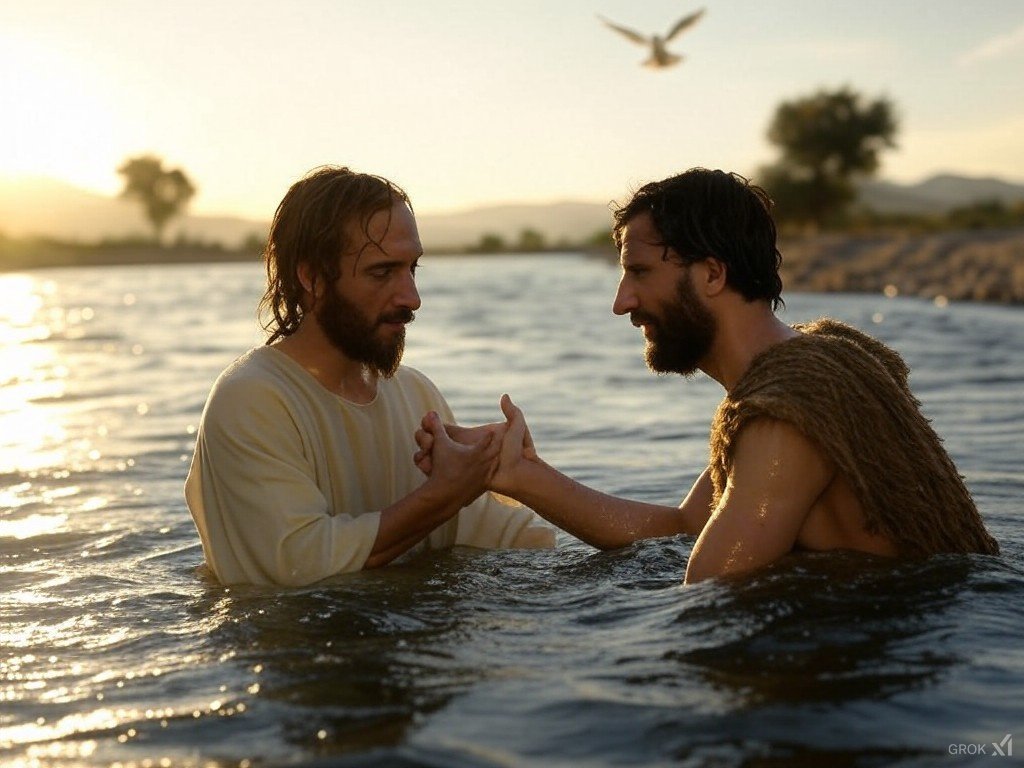 Course Lesson
What Was the Early Christian View on the Laying on of Hands for the Holy Spirit and Forgiveness of Sins in Baptism?
Open a related course lesson for more teaching connected with Confession of sins.
Course Lesson
What Was the Early Christian View on the Laying on of Hands for the Holy Spirit and Forgiveness of Sins in Baptism?
Open a related course lesson for more teaching connected with Confession of sins.
 Site Page
Absolution and Forgiveness of Sins
Compare another early Christian topic page with related source quotations.
Site Page
Confession to a priest
Compare another early Christian topic page with related source quotations.
Site Page
Exomologesis and Public Confession
Compare another early Christian topic page with related source quotations.
Site Page
Absolution and Forgiveness of Sins
Compare another early Christian topic page with related source quotations.
Site Page
Confession to a priest
Compare another early Christian topic page with related source quotations.
Site Page
Exomologesis and Public Confession
Compare another early Christian topic page with related source quotations.